Scatter Plot of Gene-Gene Correlation
Run the tool first...
相关性散点图是一种用于展示两个变量之间关系的图表类型。
输入文件

文件的第一行是 ID,第二行和第三行是基因,各行列之间以制表符(\t)分隔。
输出文件

- 中心散点图:
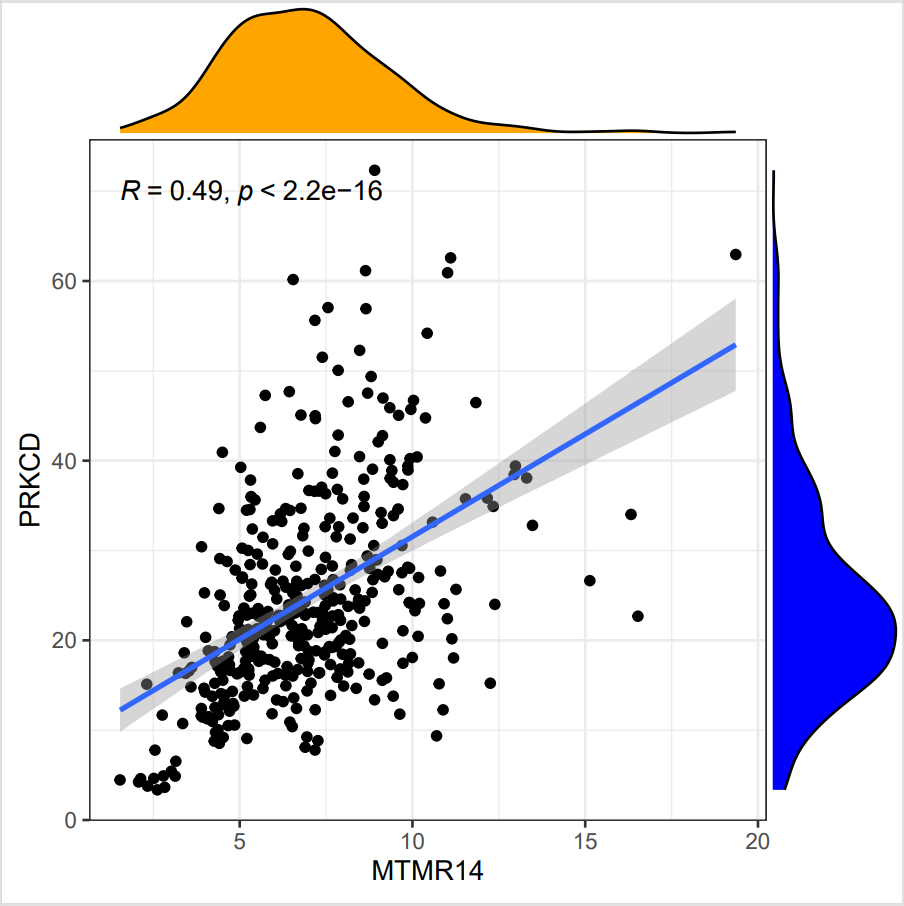
- 图中的每一个点代表一个样本。
- 点的分布趋势揭示了两个基因表达量的关系。如果点倾向于从左下到右上分布,则为正相关;反之则为负相关。
- 图中的统计值 "R" 代表斯皮尔曼(Spearman)相关系数,衡量相关性强度;"p" 代表p-value,用于判断该相关性是否显著(通常 p < 0.05 认为显著)。
- 顶部和右侧的密度图:
- 顶部图(橙色): 显示了横坐标基因在所有样本中表达量的分布情况。峰值越高,表示该表达水平的样本越集中。
- 右侧图(蓝色): 显示了纵坐标基因在所有样本中表达量的分布情况。
A correlation scatter plot is a type of chart used to display the relationship between two variables.
Input
The first row is ID, the second and third rows are genes, separated by \t.
Output
1. Chart Purpose
This chart aims to visualize and analyze whether there is a statistically significant association between the expression levels of two genes (the x-axis represents [Gene 1 name] and the y-axis represents [Gene 2 name]) across all samples.
2. How to Interpret This Chart
Central Scatter Plot:
-
Each point in the plot represents a sample.
-
The distribution trend of the points reveals the relationship between the expression levels of the two genes:
-
If the points tend to cluster from the bottom-left to the top-right, it indicates a positive correlation.
-
If the points trend from the top-left to the bottom-right, it suggests a negative correlation.
-
-
The statistical values provided are:
-
"R": Represents the Spearman correlation coefficient, measuring the strength of the correlation.
-
"p": Represents the p-value, used to determine whether the correlation is statistically significant (typically, p < 0.05 is considered significant).
-
Top and Right Density Plots:
-
Top plot (orange): Displays the distribution of the x-axis gene's expression levels across all samples. A higher peak indicates that more samples are concentrated at that expression level.
-
Right plot (blue): Shows the distribution of the y-axis gene's expression levels across all samples.