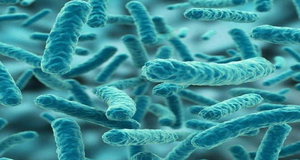
炭疽芽孢杆菌属于蜡样芽孢杆菌组,是一种需氧、能形成孢子的革兰氏阳性菌。该生物体存在两种物理形态,即活跃的繁殖体形态和不活跃的孢子形态。在感染个体的组织中炭疽芽孢杆菌通常为繁殖体形态;当动物死于感染时,繁殖体转化为不活跃、抗逆性强的孢子形态,直到其感染新的宿主。炭疽芽孢杆菌孢子对干旱、高温、雨水、寒冷、辐射和消毒剂等环境具有抗性,这也是其被用作潜在生物战剂的原因之一。
人通常通过接触受感染的动物,或因职业、营养暴露于受污染的动物制品(如肉、毛发或皮肤)而感染炭疽。人感染炭疽主要有三种途径:皮肤、呼吸道和胃肠道。皮肤炭疽是人感染炭疽芽孢杆菌最常见的表现,占总病例的95%以上。皮肤炭疽虽然可能致命,但未经治疗时通常具有自限性;急性吸入性炭疽常在死后被确诊,纵隔增宽是其典型影像学表现;肠炭疽多因食用未煮熟的被感染的肉类所致,尽管其致病率评估较为困难,但实际致死风险更高。
炭疽芽孢杆菌可通过合成炭疽毒素蛋白和聚-D-谷氨酸荚膜的能力与其近源物种进行区分。主要的致病因子由位于毒力质粒pXO1和pXO2上的基因编码。炭疽毒素由保护性抗原(PA)、水肿因子(EF)和致死因子(LF)三种协同作用的蛋白组成。PA与EF结合形成水肿毒素,PA与LF结合形成致命毒素。PA将LF和EF转运到靶细胞内,在靶细胞内它们与关键的细胞途径进行相互作用。这些毒素与炭疽病的特征性体征和临床症状相关,聚-D-谷氨酸荚膜则保护细菌免受吞噬作用的影响。
Samples collection date:
Samples host information:
Samples MLST information:
Samples phylogroup information:
Samples Virulence information:
Samples Resistance information:
[1] Turnbull P C. Definitive identification of Bacillus anthracis--a review[J]. J Appl Microbiol, 1999, 87(2): 237-40.
[2] Doganay M. Anthrax. Infectious Diseases. 4th ed[M]. The Netherlands: Elsevier; Amsterdam, 2017.
[3] Pilo P, Frey J. Pathogenicity, population genetics and dissemination of Bacillus anthracis[J]. Infect Genet Evol, 2018, 64: 115-125.
[4] Zasada A A. Detection and Identification of Bacillus anthracis: From Conventional to Molecular Microbiology Methods[J]. Microorganisms, 2020, 8(1): 125.
[5] Chateau A, Van der Verren S E, Remaut H, et al. The Bacillus anthracis Cell Envelope: Composition, Physiological Role, and Clinical Relevance[J]. Microorganisms, 2020, 8(12): 1864.
[6] Koehler T M. Bacillus anthracis physiology and genetics[J]. Mol Aspects Med, 2009, 30(6): 386-96.
[7] Zasada A A. Detection and Identification of Bacillus anthracis: From Conventional to Molecular Microbiology Methods[J]. Microorganisms, 2020, 8(1): 125.