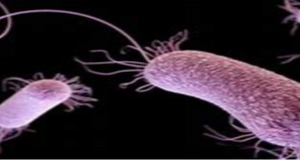
铜绿假单胞菌属于假单胞菌科,是一种运动的、不发酵的、革兰氏阴性、杆状且呈蓝绿色的细菌,通常从植物、水果、土壤以及河流、湖泊和游泳池等水环境中分离。铜绿假单胞菌也存在于健康人群皮肤上,可从非住院患者的咽喉(5%)和粪便(3%)中分离,其主要引发院内感染,如肺炎、尿路感染、伤口感染、骨骼、关节以及血液感染。当上皮屏障受损、中性粒细胞生成减少、气道粘液纤毛清除功能改变或存在植入性医疗装置时,铜绿假单胞菌的繁殖能力显著增强。医疗干预措施如机械通气、手术、抗生素治疗和化疗是医院环境中可能进一步导致铜绿假单胞菌严重感染的主要危险因素。此外,铜绿假单胞菌还能引起社区获得性感染(胃肠道感染、皮肤和软组织感染以及外耳炎),并且与囊性纤维化患者的下呼吸道感染有关。
由于铜绿假单胞菌对抗生素具有天然抗性和获得性耐药性,因此治疗铜绿假单胞菌感染十分困难。多重耐药的铜绿假单胞菌通常源于多种复杂耐药机制的相互作用,如外膜孔蛋白表达降低、AmpC酶高表达、外排泵活性增强以及青霉素结合蛋白靶点突变。几乎所有的铜绿假单胞菌水平获得抗性基因都与Ambler β-内酰胺酶的插入有关,而这些酶通常编码在I类整合子中。除了β-内酰胺酶外,整合子或质粒中通常携带不同的氨基糖苷类修饰酶和其他不太常见的决定簇(例如,氟喹诺酮类药物和粘菌素抗性基因)。
铜绿假单胞菌中毒力基因的表达由极其复杂、相互交织的调控网络和多个信号系统控制。作为一种机会性致病菌,铜绿假单胞菌利用其III型分泌系统分泌各种外毒素(ExoS、ExoU、ExoT和ExoY)以及群体感应(QS)系统(细胞密度依赖性调节),控制许多重要的分泌毒力因子,包括绿脓菌素、弹性蛋白酶、氰化物和鼠李糖脂。
Samples collection date:
Samples host information:
Serotype information:
Samples MLST information:
Samples phylogroup information:
Samples Virulence information:
Samples Resistance information:
[1] Furtado G H, d'Azevedo P A, Santos A F, et al. Intravenous polymyxin B for the treatment of nosocomial pneumonia caused by multidrug-resistant Pseudomonas aeruginosa[J]. Int J Antimicrob Agents, 2007, 30(4): 315-9.
[2] Gonzalez M R, Fleuchot B, Lauciello L, et al. Effect of Human Burn Wound Exudate on Pseudomonas aeruginosa Virulence[J]. mSphere, 2016, 1(2): e00111-15.
[3] Shi Q, Huang C, Xiao T, et al. A retrospective analysis of Pseudomonas aeruginosa bloodstream infections: prevalence, risk factors, and outcome in carbapenem-susceptible and -non-susceptible infections[J]. Antimicrob Resist Infect Control, 2019, 8: 68.
[4] Hurley J C. Incidences of Pseudomonas aeruginosa-Associated Ventilator-Associated Pneumonia within Studies of Respiratory Tract Applications of Polymyxin: Testing the Stoutenbeek Concurrency Postulates[J]. Antimicrob Agents Chemother, 2018, 62(8): e00291-18.
[5] Breidenstein E B M, Fuente-Nú?ez C d l, Hancock R E W. Pseudomonas aeruginosa: all roads lead to resistance[J]. Trends in Microbiology, 2011, 19(8): 419-426.
[5] Tamma P D, Aitken S L, Bonomo R A, et al. Infectious Diseases Society of America 2022 Guidance on the Treatment of Extended-Spectrum β-lactamase Producing Enterobacterales (ESBL-E), Carbapenem-Resistant Enterobacterales (CRE), and Pseudomonas aeruginosa with Difficult-to-Treat Resistance (DTR-P. aeruginosa)[J]. Clin Infect Dis, 2022, 75(2): 187-212.
[7] Yoon E J, Jeong S H. Mobile Carbapenemase Genes in Pseudomonas aeruginosa[J]. Front Microbiol, 2021, 12: 614058.
[8] Kocsis B, Gulyás D, Szabó D. Diversity and Distribution of Resistance Markers in Pseudomonas aeruginosa International High-Risk Clones[J]. Microorganisms, 2021, 9(2): 359.