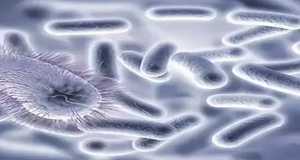
克罗诺杆菌属由一组可能危及生命的,与医学疾病相关的,机会性、革兰氏阴性病原体构成。其可从谷物、奶粉、蔬菜、水果、植物、粪便、河水等多种食物和环境样本中分离得到。
克罗诺杆菌属由C. sakazakii、C. malonaticus、C. turicensis、C. universalis、C. muytjensii、C. dublinensis和C. condimenti七种病原体组成。其中,C. sakazakii、C. malonaticus和C. turicensis具有重要的临床意义,其他四种主要作为环境共生菌存在。值得注意的是,C. sakazakii和C. malonaticus与新生儿感染有关。尽管感染发生率较低,但克罗诺杆菌感染在新生儿中死亡率高达27%-80%。因此,新生儿和低出生体重婴儿是最易感染人群,他们可能通过食用婴儿配方奶粉或通过被污染的奶瓶等器具而感染克罗诺杆菌。克罗诺杆菌感染的临床特征主要包括败血症、坏死性小肠结肠炎、脑膜炎和严重的神经系统后遗症。
克罗诺杆菌的致病性及疾病发展取决于多个因素,例如由质粒编码的毒力因子。目前已发现多种毒力特性,包括在HEp-2和Caco-2等细胞系中的细胞黏附和侵袭能力、鞭毛运动性、在巨噬细胞内的存活能力、唾液酸利用能力、荚膜和内毒素的产生、以及ompA、cpa、fliC、hly、sip、aut、plas和inv等毒力基因的存在。此外,克罗诺杆菌属对抗生素的耐受性也比较强,其对β-内酰胺类抗生素如第一、第二代头孢菌素和氨苄西林耐药,且存在marA、glpT、ampH、blaCSA和mcr等耐药基因。
克罗诺杆菌属具有良好的环境应激耐受性,这与存在的可传递的应激耐受位点(tLST,以前称为耐热位点LHR)有关,该位点赋予克罗诺杆菌属对热的耐受性。多数菌株耐热能力有限,但携带tLST位点的菌株则表现出明显的耐热特性。tLST由一些编码热休克蛋白的基因组成,包括编码small heat shock protein sHSP20、heat resistance protein PsiE-GI以及heat resistance proteins YfdX1和YfdX2的基因,这些基因在某些肠杆菌科细菌中可通过水平基因转移而被调动。此外,生物膜的形成也有助于细菌抵抗各种环境压力。细菌能够在表面形成生物膜,提高在环境中的存活率。
Samples collection date:
Samples host information:
Serotype information:
Samples MLST information:
Samples phylogroup information:
Samples Virulence information:
Samples Resistance information:
[1] Blackwood BP, Hunter CJ. Cronobacter spp. Microbiol Spectr. 2016;4(2):10.1128/microbiolspec.EI10-0002-2015.
[2] Holý O, Parra-Flores J, Bzdil J, et al. Screening of Antibiotic and Virulence Genes from Whole Genome Sequenced Cronobacter sakazakii Isolated from Food and Milk-Producing Environments. Antibiotics (Basel). 2023;12(5):851.
[3] Joseph S, Forsythe SJ. Insights into the Emergent Bacterial Pathogen Cronobacter spp., Generated by Multilocus Sequence Typing and Analysis. Front Microbiol. 2012;3:397.
[4] Fei P, Man C, Lou B, et al. Genotyping and Source Tracking of Cronobacter sakazakii and C. malonaticus Isolates from Powdered Infant Formula and an Infant Formula Production Factory in China. Appl Environ Microbiol. 2015;81(16):5430-5439.
[5] Feeney A, Kropp KA, O'Connor R, Sleator RD. Cronobacter sakazakii: stress survival and virulence potential in an opportunistic foodborne pathogen. Gut Microbes. 2014;5(6):711-718.
[6] Li Y, Zhang Y, Zhang L, et al. Prevalence and genetic characteristics of Cronobacter spp. from food and human clinical stool samples in Wenzhou, China 2008-2018. Food Microbiol. 2020;89:103432.
[7] Holý O, Parra-Flores J, Lepuschitz S, et al. Molecular Characterization of Cronobacter sakazakii Strains Isolated from Powdered Milk. Foods. 2020;10(1):20.
[8] Parra-Flores J, Holý O, Riffo F, et al. Profiling the Virulence and Antibiotic Resistance Genes of Cronobacter sakazakii Strains Isolated From Powdered and Dairy Formulas by Whole-Genome Sequencing. Front Microbiol. 2021;12:694922.
[9] Parra-Flores J, Holý O, Acuña S, et al. Genomic Characterization of Cronobacter spp. and Salmonella spp. Strains Isolated From Powdered Infant Formula in Chile. Front Microbiol. 2022;13:884721.
[10] Phair K, Pereira SG, Kealey C, Fanning S, Brady DB. Insights into the mechanisms of Cronobacter sakazakii virulence. Microb Pathog. 2022;169:105643.
[11] Osaili T, Forsythe S. Desiccation resistance and persistence of Cronobacter species in infant formula. Int J Food Microbiol. 2009;136(2):214-220.
[12] Kamal SM, Simpson DJ, Wang Z, Gänzle M, Römling U. Horizontal Transmission of Stress Resistance Genes Shape the Ecology of Beta- and Gamma-Proteobacteria. Front Microbiol. 2021;12:696522.
[13] Boll EJ, Marti R, Hasman H, et al. Turn Up the Heat-Food and Clinical Escherichia coli Isolates Feature Two Transferrable Loci of Heat Resistance. Front Microbiol. 2017;8:579.
[14] Grimm M, Stephan R, Iversen C, et al. Cellulose as an extracellular matrix component present in Enterobacter sakazakii biofilms. J Food Prot. 2008;71(1):13-18.