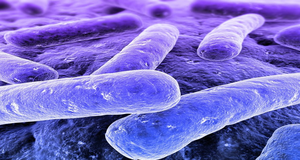
艰难梭菌是一种厌氧、能产芽孢的革兰氏阳性杆菌,广泛分布于自然环境中,能够在人体肠道内定殖和繁殖。
艰难梭菌感染(CDI)是一种常见的获得性院内肠道感染,其死亡率和发病率都很高,疾病的严重程度不断增加。临床症状包括中度腹泻、中毒性巨结肠、结肠穿孔,甚至死亡。2013年和2019年关于抗菌素耐药性报告中,美国疾病控制预防中心将CDI列为当前需应对的重大健康威胁。社区相关的CDI目前变得越来越频繁,且与动物和环境中的艰难梭菌有关。
万古霉素和非达霉素是治疗非重症CDI的一线治疗药,鉴于非达霉素可显著降低疾病复发率,传染病学会最新指南已将其列为优先推荐方案。
艰难梭菌与其他已知的梭菌不同,其种群遗传多样性高。基于MLST分型,艰难梭菌可分为八个单系群/分支。这些分支中的菌株在临床表征、微生物特性和生态学方面均呈现显著差异。CDI的发病机制与大型梭菌毒素(TcdA和TcdB)和二元毒素(CDT)(在部分菌株中)的表达有关,他们分别由两个独立的染色体位点PaLoc和CdtLoc编码。分支1(C1)包含200 多种产毒和非产毒序列类型,其中包括许多在全球范围内引起CDI的常见菌株,例如ST2、ST8和ST17。分支2(C2)中存在多种高毒力产CDT的菌株,包括与北美、欧洲和拉丁美洲医院CDI暴发事件相关的ST1菌株(RT 027)。2005年RT 027型菌株分别导致美国、加拿大51%和84%的CDI病例。目前,分支3(C3)的研究相对有限,尽管它包含ST5(RT 023)这一特殊菌株——兼具产毒及产CDT特性,但实验室检测难度较大。分支4(C4)包含ST37(RT 017)菌株,尽管ST37缺少毒素A基因,但它仍是亚洲大部分地区CDI地方性流行的主要病原体。分支5(C5)包含多个产CDT菌株,包括ST11(RTs 078、126等),这些菌株已在全球畜禽养殖领域中广泛流行。cryptic分支(C-I、C-II 和 C-III)自2012年首次报道以来,已从临床和环境样本中分离到50多种ST型,但这些菌株的进化机制尚未明确。C-I菌株可引起CDI,但由于其毒素基因结构不典型,现有方法不容易检测到,导致该类菌株流行率被远远低估。
Samples collection date:
Samples host information:
Samples MLST information:
Samples phylogroup information:
Samples Virulence information:
Samples Resistance information:
[1] CDC. Antibiotic Resistance Threats in the United States, 2013[EB/OL]. (http://www.cdc.gov/drugresistance/threat-report-2013/)
[2] CDC. Antibiotic Resistance Threats in the United States, 2019[EB/OL]. (https://www.cdc.gov/drugresistance/pdf/threats-report/2019-ar-threats-report-508.pdf)
[3] Guh A Y, Mu Y, Winston L G, et al. Trends in U.S. Burden of Clostridioides difficile Infection and Outcomes[J]. N Engl J Med, 2020, 382(14): 1320-1330.
[4] Lim S C, Knight D R, Riley T V. Clostridium difficile and One Health[J]. Clin Microbiol Infect, 2020, 26(7): 857-863.
[5] Clarke L M, Allegretti J R. Review article: The epidemiology and management of Clostridioides difficile infection-A clinical update[J]. Aliment Pharmacol Ther, 2024, 59(11): 1335-1349.
[6] Knight D R, Elliott B, Chang B J, et al. Diversity and Evolution in the Genome of Clostridium difficile[J]. Clin Microbiol Rev, 2015, 28(3): 721-41.
[7] Chandrasekaran R, Lacy D B. The role of toxins in Clostridium difficile infection[J]. FEMS Microbiol Rev, 2017, 41(6): 723-750.
[8] Mcdonald L C, Killgore G E, Thompson A, et al. An epidemic, toxin gene-variant strain of Clostridium difficile[J]. The New England journal of medicine, 2005, (23): 353.
[9] Jacek, Czepiel, Mirosław, et al. Clostridium difficile infection: review[J]. European Journal of Clinical Microbiology & Infectious Diseases Official Publication of the European Society of Clinical Microbiology, 2019, 38(7): 1211-1221.
[10] Knight D R, Imwattana K, Kullin B, et al. Major genetic discontinuity and novel toxigenic species in Clostridioides difficile taxonomy[J]. Elife, 2021, 10: e64325.
[11] Ramírez-Vargas G, López-Ureña D, Badilla A, et al. Novel Clade C-I Clostridium difficile strains escape diagnostic tests, differ in pathogenicity potential and carry toxins on extrachromosomal elements[J]. Sci Rep, 2018, 8(1): 13951.